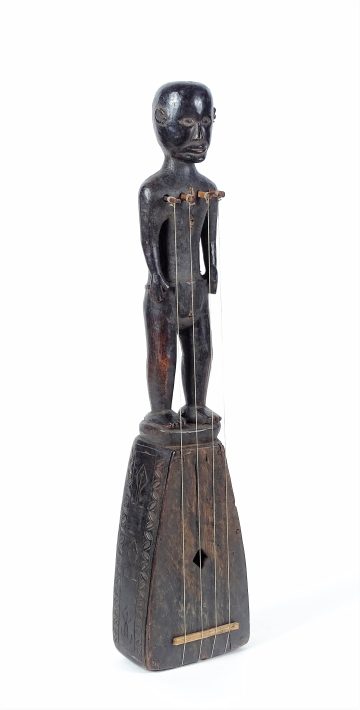
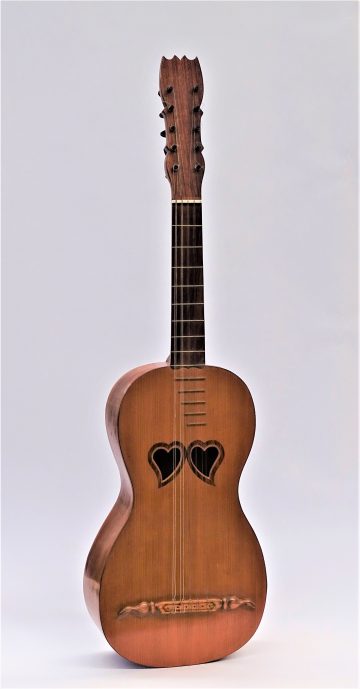
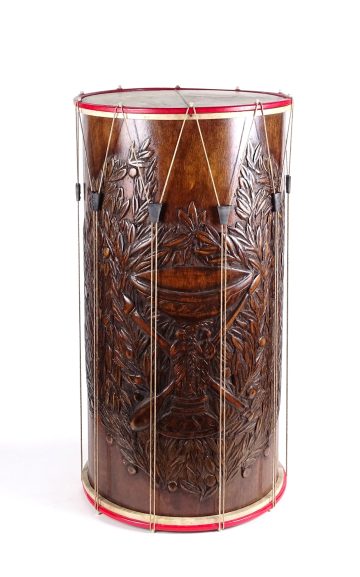
La historia de esta colección comienza a principios de los años ochenta. Como consecuencia de nuestra afición y participación en grupos musicales, veníamos adquiriendo diferentes instrumentos musicales. Poco a poco, lo que no era más que un mero capricho se fue materializando en un conjunto más amplio y variado, y organizamos la primera exposición en Hondarribia con 200 instrumentos, bajo el título genérico que se ha ido repitiendo en posteriores muestras:
“MÚSICA PARA VER. Instrumentos del mundo”
Esta denominación -Música para ver- se encuentra actualmente registrada para actividades expositivas.
Desde aquellas fechas, hemos ido profundizando progresivamente en la organología, así como en el conocimiento sobre las diferentes etnias de los cinco continentes y en todo lo relacionado con ellas: ritos, creencias, costumbres...
Hoy en día la colección cuenta con más de 5.000 instrumentos, muchos de ellos de gran valor etnomusicológico y artístico.
El trabajo realizado abarca los siguientes aspectos: recolección, catalogación, conservación y exposición de los instrumentos.
Según nuestro criterio personal actual y después de conocer diversos museos especializados en este tema, podemos afirmar que contamos con una de las mejores colecciones privadas de Europa, opinión que ha sido corroborada en diversas ocasiones por diferentes etnomusicólogos, conservadores de museos de instrumentos musicales, expertos en musicología, catedráticos, etc.
Se han realizado diversas exposiciones en diferentes localidades de España y Francia, destacando la realizada durante 1.992 en León, coincidiendo con la exposición de “Las Edades del Hombre” dedicada a la música, y la exposición itinerante organizada por Caixanova en Galicia, con una duración de dos años y una media de 350 instrumentos en cada exposición.
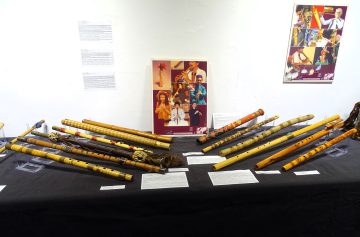
Aerófonos: Vientos del Mundo
AERÓFONOS: “VIENTOS DEL MUNDO”
Desde tiempos remotos, las culturas del mundo han convertido el aire en música mediante los aerófonos, una de las familias instrumentales más antiguas y diversas. Su variedad es inmensa: flautas de caña o hueso, caracolas rituales, trompas de madera o cuerno, ocarinas y vasijas silbadoras precolombinas, clarinetes y oboes tradicionales, o trompetas naturales de distintos continentes. Cada instrumento muestra cómo las comunidades transformaron materiales locales —bambú, madera, metal, piedra, arcilla, cuerno— en sonido.
La exposición recorre esta diversidad, revelando cómo, pese a compartir un mismo principio físico, los aerófonos cumplen funciones culturales muy distintas: convocar a la comunidad, acompañar danzas y rituales, marcar autoridad o simbolizar protección y fertilidad.
Explorar estos instrumentos es explorar la creatividad humana. Cada sonido, del soplo más suave al llamado más potente, encierra una historia y un paisaje. La muestra invita a “escuchar con la mirada”, descubriendo cómo el aire, el elemento más intangible, puede transformarse en música.